Procurement Guide: Carbon Fiber for Fishing Rods
Carbon fiber has become an essential material in the manufacture of fishing rods due to its outstanding tensile strength, frequently surpassing 3,500 MPa. This guide aims to assist procurement managers and sourcing specialists in understanding the intricacies of sourcing carbon fiber for fishing rods. We will examine supplier evaluation criteria, necessary quality certifications, minimum order quantities (MOQ), lead time expectations, and strategies for cost optimization. Leveraging decades of expertise, Impact Materials offers insights into securing the best materials for performance-driven applications.
For additional insights and expert advice on sourcing, visit the comprehensive resource on ictmaterial.com.
Key Considerations in Carbon Fiber Sourcing
Evaluating Technical Specifications
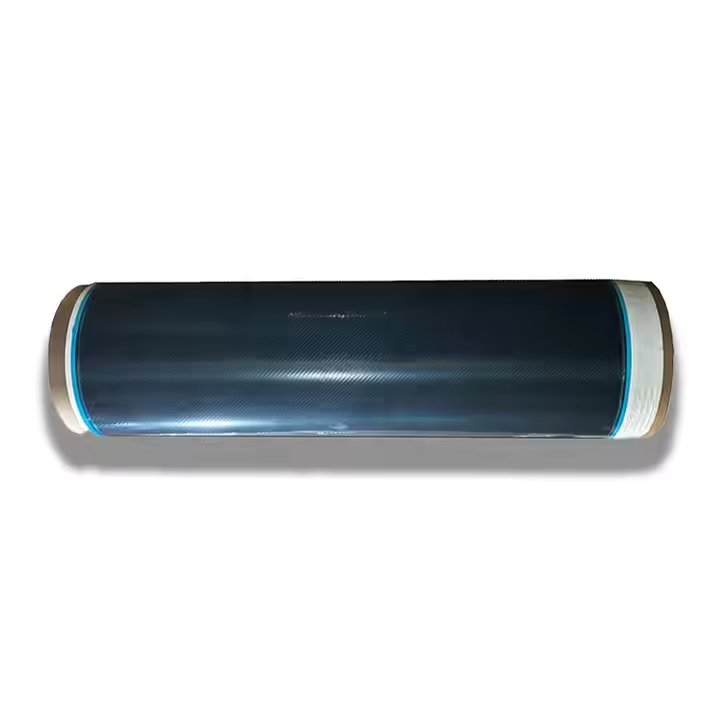
The choice of carbon fiber is largely influenced by its technical properties, such as its high strength-to-weight ratio. With tensile strengths ranging from 3,500 MPa to 4,500 MPa and a density of 1.6 g/cm³, these properties ensure that rods are not only durable but also light, which aids in casting precision and user comfort. Products like the 3K Twill Carbon Fiber Fabric demonstrate these traits, essential for high-performance fishing rods.
Advantages of Carbon Fiber in Sporting Goods
Compared to traditional materials such as fiberglass, carbon fiber rods provide extraordinary benefits. The reduced weight minimizes muscle fatigue, allowing for prolonged fishing sessions. Moreover, the elasticity modulus, typically around 230 GPa, enhances rod sensitivity, efficiently transmitting even the slightest fish bites. These characteristics are advantageous in other athletic equipment, including hockey sticks and guitars, where performance and weight are critical.
Applications and Tailoring of Carbon Fiber Rods
Diverse Application Scenarios
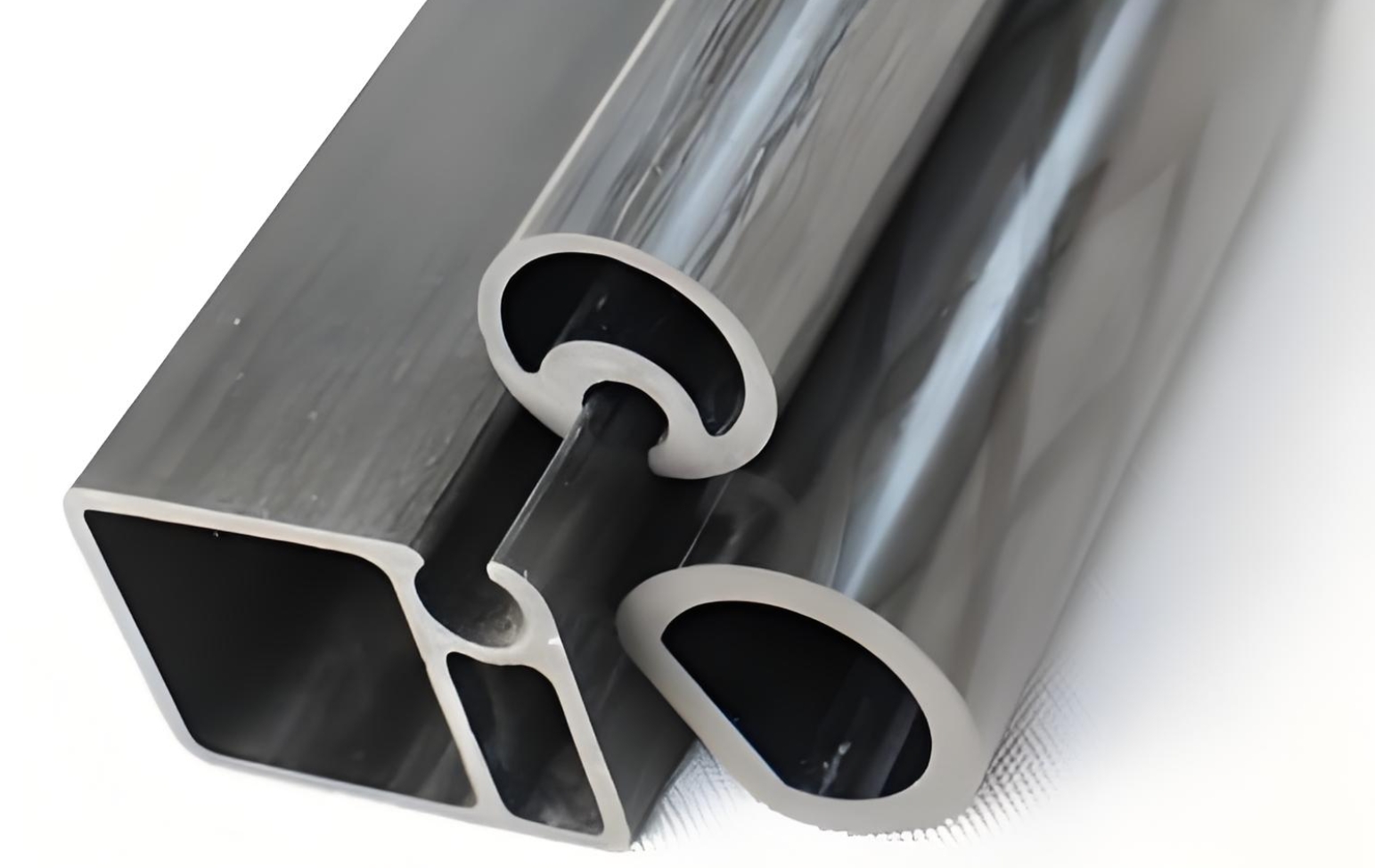
Carbon fiber fishing rods are suitable across various environments, from freshwater lakes to deep-sea fishing. Their remarkable strength and flexibility make them adaptable to different fishing techniques and conditions. Products like the Customized Round CFRP Carbon Fiber Tube allow for personalization in both aesthetics and function, catering to specific angler preferences.
Customization Techniques and Benefits
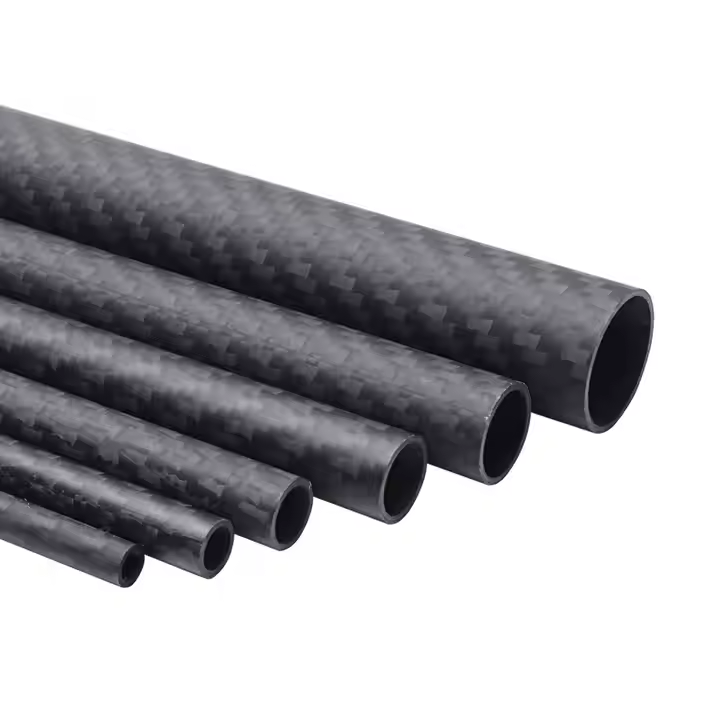
Customization plays a pivotal role in the manufacturing of carbon fiber rods. Techniques such as filament winding and tailored fiber placement enable precise manipulation of rod characteristics like action and stiffness. Vendors like Impact Materials offer a variety of matte and glossy pultrusion options, ensuring products meet exact customer specifications while maintaining rigorous quality standards, including ISO 14125 and ASTM D3039.
Featured Carbon Fiber Products for Fishing Rods
Discover our top carbon fiber products specially designed for fishing rods, available through Impact Materials and trusted by manufacturers worldwide.
Ensuring Quality and Choosing the Right Supplier
Quality Assurance Protocols
Quality assurance is of utmost importance when sourcing carbon fiber materials. Suppliers should hold certifications like ISO 9001 to guarantee adherence to international quality management standards. Testing methodologies, including ASTM D3039 for tensile properties and ISO 14125 for flexural strength, are crucial for verifying the performance of materials. Requesting a Certificate of Analysis (COA) provides further confidence in the quality of the products received.
Criteria for Supplier Evaluation
Identifying an appropriate supplier involves assessing their industry experience, product offerings, and ability to fulfill custom requirements. With over 20 years of expertise, Impact Materials has successfully executed projects for clients in over 120 countries, making them a reputable choice for diverse sourcing needs. For those looking to source carbon fiber for fishing rod from China, it is vital to evaluate suppliers based on these criteria.
Cost Management and Optimization in Sourcing
Balancing Cost and Quality
Cost considerations are crucial in the procurement process, yet it’s important to balance cost with quality. While it may be tempting to opt for the cheapest supplier, the long-term benefits of high-quality carbon fiber, such as increased product lifespan and reduced failure rates, should influence the decision. Effective cost management strategies involve negotiating favorable terms, understanding volume discounts, and considering logistics costs.
Recognizing Red Flags in Supplier Relations
Operational red flags can emerge during the sourcing process. Inconsistencies in product quality, lack of transparency in operations, and inadequate communication can indicate potential problems. Regular audits and consistent communication with suppliers are essential to mitigate these risks and ensure a smooth procurement process.
For more information on the range of solutions available, visit Impact Materials for carbon fiber for fishing rod solutions.